
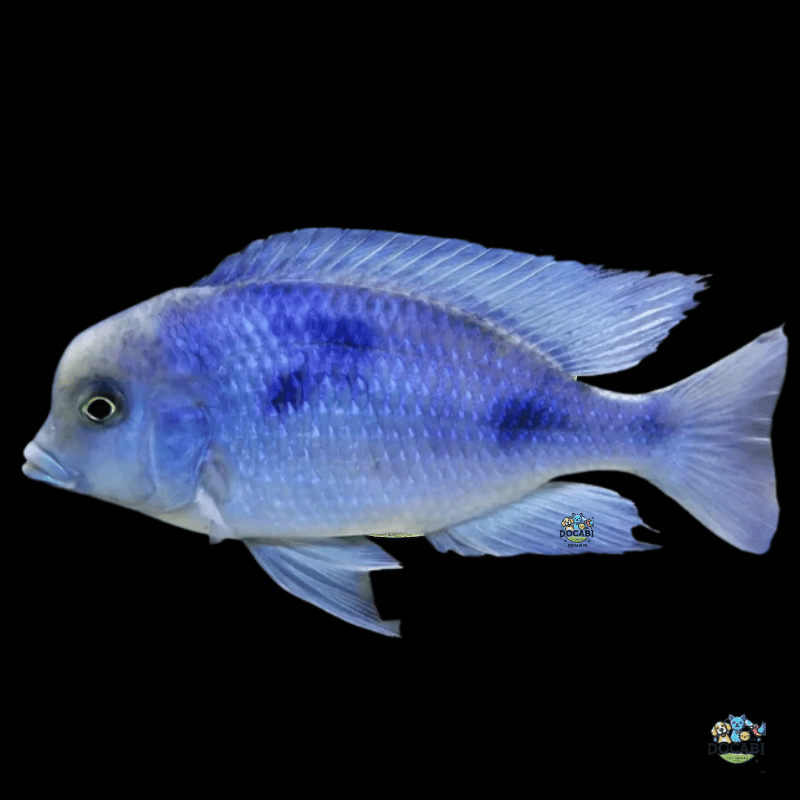
The Blue Dolphin Cichlid (Cyrtocara moorii) is a large, semi-aggressive African cichlid from Lake Malawi, prized for its powder-blue coloration and distinctive forehead hump. To thrive, it requires a spacious tank (minimum 100 gallons for a group), alkaline water (pH 7.8–8.6), and a carefully managed diet to avoid health issues like Malawi bloat.
🐟 Species Overview
- Scientific Name: Cyrtocara moorii
- Common Name: Blue Dolphin Cichlid
- Origin: Lake Malawi, East Africa
- Adult Size: 8–10 inches (20–25 cm)
- Lifespan: 10–15 years
- Temperament: Semi-aggressive, peaceful compared to Mbuna
- Diet: Carnivorous sand-sifter (protein-rich foods)
- Difficulty: Intermediate care level
🌊 Tank & Water Requirements
- Minimum Tank Size: 100 gallons for a harem (1 male, 3+ females)
- Water Parameters:
- pH: 7.8–8.6
- Hardness: 10–25 dGH
- Temperature: 70–81°F (21–27°C)
- Substrate: Aragonite sand (supports natural sifting behavior)
- Filtration: Strong canister filters (high bio-load management)
🍽️ Diet & Feeding
- Primary Foods: High-protein pellets, frozen foods (krill, mysis shrimp)
- Supplement: Spirulina or fiber-rich foods to prevent Malawi bloat
- Feeding Behavior: “Follower” strategy in the wild — sifts sand for small organisms
👫 Tankmates
- Best Matches: Other peaceful Haps and Peacocks, Frontosa, Sailfin Pleco, certain catfish
- Avoid: Aggressive Mbuna species (rock-dwellers)
🐣 Breeding
- Method: Maternal mouthbrooding (female incubates eggs in mouth for ~3 weeks)
- Fry Care: Feed infusoria and baby brine shrimp
- Sex Ratio: 1 male to 3+ females reduces aggression
🌳 Taxonomic Family Tree
| Rank | Classification |
|---|---|
| Kingdom | Animalia |
| Phylum | Chordata |
| Class | Actinopterygii (ray-finned fishes) |
| Order | Cichliformes |
| Family | Cichlidae (cichlids) |
| Subfamily | Pseudocrenilabrinae |
| Tribe | Haplochromini |
| Genus | Cyrtocara (monotypic genus) |
| Species | Cyrtocara moorii (Blue Dolphin Cichlid) |
⚠️ Risks & Challenges
- Malawi Bloat: Caused by poor diet (too much protein, lack of fiber).
- Aggression: Males can be territorial; maintain proper ratios.
- Tank Size: Small tanks lead to stress and suppressed hump development.
- Disease: Susceptible to Ich in high-alkalinity environments.
⚠️ Disclaimer
This guide is intended solely for general information and hobbyist aquarium care purposes. The suggestions provided are not a substitute for professional veterinary or aquatic expert advice. Results may vary depending on water quality, fish species, and equipment condition. Always consult a specialist before using any treatment or chemicals. The creator or author shall not be held responsible for any damage, loss, or unexpected outcomes of any kind.