
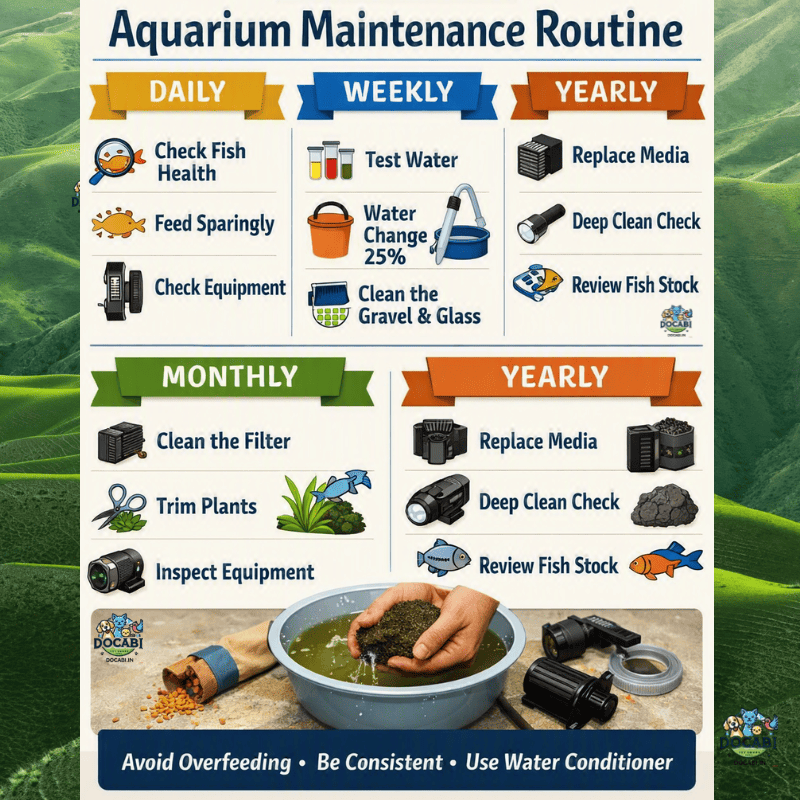
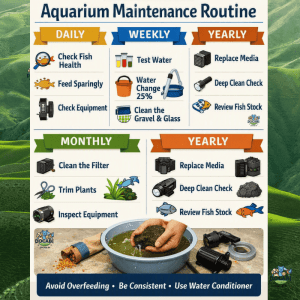
To maintain a healthy aquarium, you need a consistent routine: check fish and equipment daily, perform partial water changes and water testing weekly, clean filters monthly, and monitor long-term stability yearly. This prevents algae, disease, and water chemistry problems.
🐠 Daily Aquarium Care
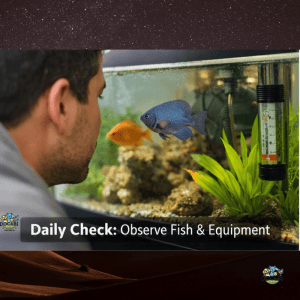
- Fish observation: Ensure fish are swimming normally, not gasping at the surface, and show no signs of stress (clamped fins, hiding, white spots).
- Feeding routine: Feed only what fish consume in 1–2 minutes; remove leftovers to avoid ammonia buildup.
- Equipment check: Confirm filter flow, heater function, and stable water temperature.
🔄 Weekly Maintenance
- Water testing: Measure ammonia, nitrite, nitrate, and pH; log results.
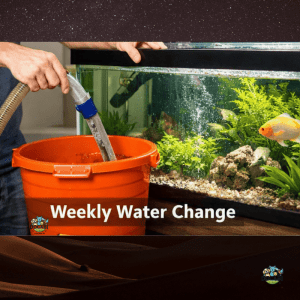
- Partial water change: Replace 10–30% of water with dechlorinated water at similar temperature.
- Gravel vacuuming: Light siphon to remove waste and detritus.(Search Results for “aquarium cleaner” – Docabi.in)
- Glass cleaning: Use algae scraper or magnetic cleaner. (Search Results for “magnetic cleaner” – Docabi.in)
- Fish health check: Look for illness signs and adjust feeding if needed.
🧼 Monthly Maintenance

- Filter cleaning: Rinse sponges in old tank water (never tap water) to preserve beneficial bacteria.
- Plant trimming: Remove dead leaves and prune overgrowth to prevent algae.
- Equipment inspection: Check impellers, hoses, and tubing for buildup or blockages.
- Parameter monitoring: Test pH, hardness (KH, GH), nitrites, and nitrates with liquid kits.
📅 Yearly Tasks
- Replace consumables: Swap activated carbon or resins as per manufacturer’s instructions.
- Deep equipment check: Inspect lighting, airline tubing, and hardscape for trapped waste zones.
- Stocking review: Assess fish growth and adjust population if necessary.
⚠️ Risks & Tips
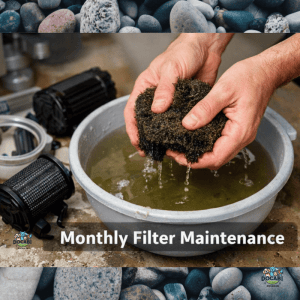
- Never deep-clean everything at once: This wipes out beneficial bacteria and destabilizes the biofilter.
- Avoid overfeeding: Excess food quickly leads to ammonia spikes.
- Regular water changes: Prevent dissolved solids drift (minerals and waste buildup) even if nitrate levels look fine.
- Consistency matters more than intensity: Small, regular actions keep the system stable.
🛠 Essential Tools
- Algae scraper or magnetic cleaner (Search Results for “aquarium cleaner” – Docabi.in)
- Gravel vacuum
- Water test kit (liquid kits preferred)
- Dechlorinator
- Dedicated bucket (never use soap)
⚠️ Disclaimer
This guide is intended solely for general information and hobbyist aquarium care purposes. The suggestions provided are not a substitute for professional veterinary or aquatic expert advice. Results may vary depending on water quality, fish species, and equipment condition. Always consult a specialist before using any treatment or chemicals. The creator or author shall not be held responsible for any damage, loss, or unexpected outcomes of any kind.